Showing posts with label crimea. Show all posts

Saturday, 5 November 2011

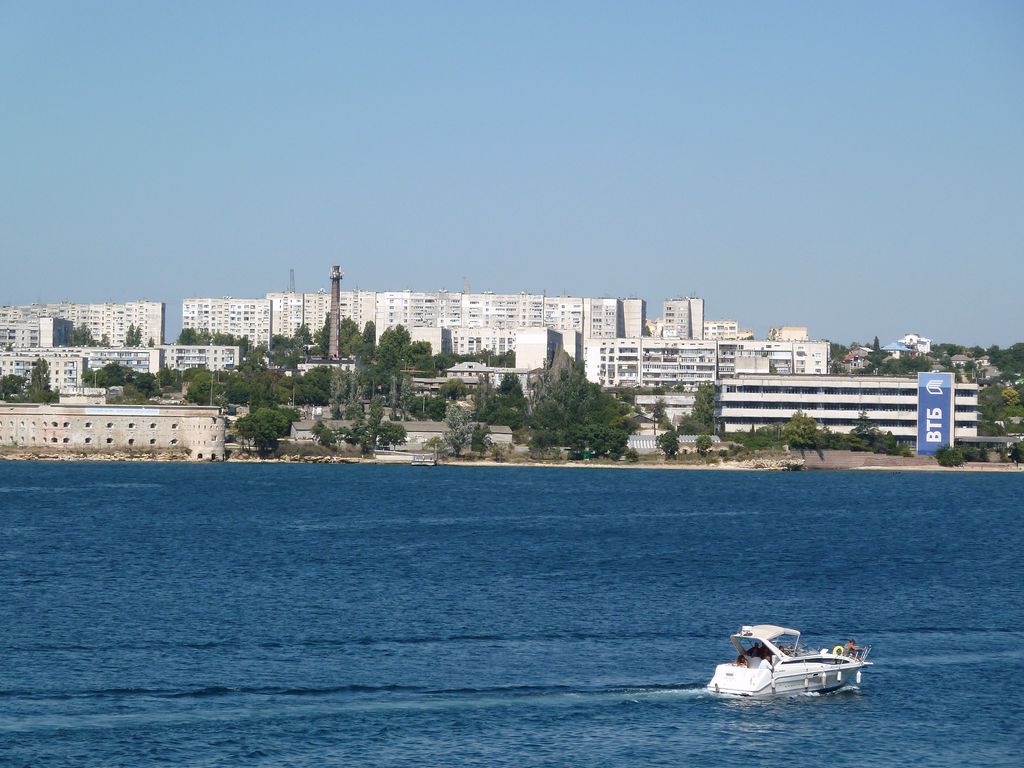
The Beauty of Crimea


The Beauty of Crimea


The Beauty of Crimea


Three years in jail for trying to smuggle ancient piece of jewelry out of Ukraine

Simferopol, Nov. 5 - A man has been sentenced to three years of jail for trying to smuggle a 2,600-year-old pure-gold neck ring out of Ukraine, the country's Security Service (SBU) said.

The torc - neck ring - weighs nearly 1 kilogram, the SBU said in a statement.

"This piece of jewelry is unique, it is historic and is valuable as a work of art and an object of cultural studies; it is not permitted to be sold, and least of all to be taken out of our country. The art collector from Kerch who tried to take the torc from Ukraine to the Russian Federation was well aware of this," the service said.

The SBU had long kept the man, who lives in Kerch, a city in the Crimea autonomous region, under surveillance, and finally organized an operation to prevent him from taking the torc across the border.

"The smuggler was detained red-handed when he was crossing the frontier. The torc was found inside the bottom of a travel bag. It was carefully packed and hidden under various ordinary belongings," the SBU said.

The Kerch city court sentenced the man to three years' imprisonment with the torc being confiscated. The ring would soon be included in the collection of one of the country's museums, the SBU said.

It said experts believed the torc was about 2,600 years old, dated back to the Scythian-Sarmatian period and was made in the days of the Borporan Kingdom.

The torc "is adorned with lions' heads and contains nothing but pure gold," the SBU said. "Only eminent people vested with authority could have worn such adornments in ancient times. The item is in an excellent state and is better preserved than all other similar historic rarities in Ukraine that are known."

Thursday, 14 July 2011

78 Children Ill With Food Poisoning At Ukraine Summer Camp

KIEV, Ukraine -- Poor-quality food prepared at a Ukrainian summer camp has left 84 Russian children and staff at the vacation centre ill, health officials said Wednesday.
The mass food poisoning took place at the Albatros youth resort near the port city Sevastopol, in the Black Sea peninsula Crimea.

Most of the 78 victims were aged from 8 to 16 and had travelled to the camp from the Russian cities of Moscow, Yekaterinburg, and Orekhovo-Zuevo, Interfax reported.

All but one of the children were suffering from moderate food poisoning and were expected to recover quickly, while one child was faring worse than the others. Six adults also were treated.

Health Minister Oleksandr Anishchenko said he intended to sack the public health director in the city Sevastopol for allowing the summer camps to operate, and for failing to enforce health regulations.

Prosecutor General Viktor Pshonka has ordered a nationwide investigation into food preparation safety at summer youth camps, with a 'special focus' on the Chernihiv and Zaporizhia districts, as well as the city of Sevastopal.

All three locations have in recent weeks seen mass cases of food-poisoned children on summer vacation, he said.

Health officials were inspecting the camps' kitchens, and managers there would likely face criminal charges, an official at the Emergency Situations Ministry said.

A Channel 24 television news report said inspectors found 'massive health law violations.'

Anishchenko said he believed the food poisoning was caused by ice cream which all 84 ill people had eaten, out of a total 293 children and staff members at the camp.

'Anyone who ate ice cream got sick,' he said, according to Korrespondent web magazine.

The Russian government was organizing charter transportation for the children to return home immediately, according to a Russian Foreign Ministry statement.
A Channel 24 television news report said inspectors found 'massive health law violations.'

Anishchenko said he believed the food poisoning was caused by ice cream which all 84 ill people had eaten, out of a total 293 children and staff members at the camp.

'Anyone who ate ice cream got sick,' he said, according to Korrespondent web magazine.

The Russian government was organizing charter transportation for the children to return home immediately, according to a Russian Foreign Ministry statement.

Group food poisoning most often occurs in Ukraine during the summer months when warm weather and occasional poor refrigeration cause quick spoilage of food served to holiday-markers.

Dairy, fish, meat, eggs and mayonnaise are the foods most commonly affected.

Meshkov Detained, Deported From Ukraine

KIEV, Ukraine -- Yuriy Meshkov, a former Crimean president who recently made attempts to start a separatist movement in the autonomous republic, on Wednesday was detained by the SBU security service and deported from Ukraine.
The move came immediately after a Crimean administrative court had approved his deportation for the calls of “changing constitutional state of Ukraine.” Meshkov, a Russian citizen, will be barred from entering Ukraine for five years.

This is the first case when a Russian citizen has been declared persona non-grata in Ukraine since Viktor Yanukovych, widely perceived as a pro-Russian leader, has been elected the president in February 2010.

Ukraine deported a number of Russian citizens during the presidency of Viktor Yushchenko, a pro-Western leader, in 2005-2010, but those moved had eventually deteriorated relations with Moscow significantly.

“The district administrative court in Crimea has upheld an application from the security service to deport Meshkov from the territory of Ukraine, restricting his entry for five years,” according to SBU press service.

Anatoliy Los, Meshkov’s ally, told Segodnia daily later on Wednesday that the SBU had immediately taken Meshov to the city of Kerch, from where he had been deported to Russia by ferry.

Meshkov, who as the president of Crimea in 1994-1995 pushed for Crimea’s independence from Ukraine, lost political battles.

Ukraine’s parliament voted in March 1995 to cancel Crimea’s controversial separatist constitution, triggering Meshkov’s dismissal and his departure to Moscow, where he had spent quietly the past 16 years.

However, his sudden return to Crimea on July 2 coincided with a clash between Russian Cossacks with Ukrainian riot police forces, and with the rise of other pro-Russian groups across Ukraine over the past two months.
Meshkov’s deportation shows the level of concern in Ukraine over separatist calls in Crimea.

This may signal a possible shift in SBU’s operation towards increasing a number of agents assigned to work against potential Russian threats.

This department, which was strong during the presidency of Yushchneko in 2005-2010, had been seriously weakened immediately after election of Yanyukovych in February 2010.

The developments, coupled with the rise of small extremist pro-Russian groups in Ukraine over the past two months, suggest coordinated moves that appear to be provoking instability in Ukraine.

Thursday, 21 October 2010

Russia, Ukraine To Regulate Size Of The Black Sea Fleet

YALTA, Ukraine -- Moscow and Kiev will soon sign an agreement regulating the upcoming overhaul of Russia's Black Sea Fleet, the Russian defense minister said on Wednesday.
"This new document will allow the Black Sea Fleet to maintain the number of personnel and weaponry at the levels stipulated in the 1997 Russian-Ukrainian accords on the Black Sea Fleet," Anatoly Serdyukov said after a meeting of CIS defense ministers in Ukraine's Crimea.

Russia's Black Sea Fleet is stationed in Ukraine's port of Sevastopol under a lease agreement. Moscow and Kiev recently signed a deal extending the lease on the fleet's base in Sevastopol for 25 years after the current lease expires in 2017.

Russia is seeking to bring its ageing Soviet-era fleet up to modern standards as part of a larger effort to modernize its armed forces.

At present, the Black Sea Fleet has about 40 operational vessels, including a single diesel-electric submarine, but most of them are slated for decommissioning.

Russian Navy Commander Admiral Vladimir Vysotsky earlier said that the fleet would be reinforced with 15 new combat ships and diesel-electric submarines by 2020.

Tuesday, 3 August 2010

Majlis refused to come to meeting with Yanukovych

Members of Council of representatives of Crimean Tartars under the President of Ukraine, who are also members of Majlis refused to take part in the meeting with President of Ukraine Victor Yanukovych, which was planned for today.

The press service of Majlis disclosed to an UNIAN correspondent that the corresponding decision was made at the session of the presidium of Majlis.

It is noted in the statement of the presidium from August 3, which was passed to UNIAN, that the meeting of Chairman of the Majlis of the Crimean Tatar People, lawmaker of Ukraine Mustafa Jemilev with the head of the state took place on May 13, 2010. During this meeting it was agreed to carry out a meeting of V. Yanukovych with the Council of representatives of Crimean Tartars under the President of Ukraine early in August.

The presidium of Majlis said that the members of the Council of representatives of Crimean Tartars under the President of Ukraine can not take part in the meeting, where “odious individuals” are invited and asked Yanukovych to assign a day for a meeting with Council of representatives of Crimean Tartars under the President of Ukraine.


Tuesday, 27 July 2010

Controversial Moscow Mayor Back In Crimea

KIEV, Ukraine -- Just weeks after losing his status of persona non-grata in Ukraine, the infamous and hard-charging Moscow Mayor Yuri Luzhkov is back in Crimea and making headlines claiming that the peninsula, and particularly the city of Sevastopol, has always been Russian.Luzhkov, whom former President Viktor Yushchenko declared “persona non-grata” in 2008 over his comments that the Crimean city of Sevastopol, where the Russian Black Sea Fleet (BSF) is based, should be transferred to Russia, was granted permission to enter Ukraine on July 9. He immediately flew to Kyiv the following day to celebrate President Viktor Yanukovych’s 60th birthday.

But the more disconcerting visit came when Luzhkov traveled to Crimea on July 24-25, which has an ethnic Russian majority and has long been a hotbed of ethnic tension. While there, he visited the Crimean capital of Simferopol, then headed to Sevastopol to meet the city’s mayor, Valeriy Saratov, with whom he signed cooperation agreements between Moscow and Sevastopol for 2011-2013.

Luzhkov also celebrated Russian Navy Day on July 25 along with Russian Prime Minister Vladimir Putin, who came to visit Yanukovych vacationing in a state residence nearby.

But experts say Luzhkov’s visit to Crimea in light of his position that Sevastopol is a “Russian city” sends the wrong signals.

“Allowing Luzhkov, someone who behaves inappropriately and considers Ukraine some sort of mistake, to visit Crimea is an irresponsible act,” said Serhiy Solodky, deputy director of the Institute of World Policy think tank. “If Russia wants to take its relations with Ukraine seriously, it wouldn’t allow people like Luzhkov to come to Ukraine and make such statements.”

Luzhkov said he expresses no regrets and stands by his statements, underscoring the strategic and geopolitical value Sevastopol carries for Russia.

"We must by no means leave Sevastopol and Crimea. This position is firm, and our response to all innuendoes is: Sevastopol is a Russian city and a Russian naval base, which ensures the geo-strategic balance in southern Russia,” he said at a July 22 press conference in Moscow. “Its loss will be tantamount to the loss of southern Russia.”

It is precisely such statements that had made Luzhkov persona non-grata in Ukraine on May 12, 2008, amidst fears of Russia’s increased involvement in Ukrainian affairs in Crimea.

Allegations have abounded in recent years that Russia uses the presence of its once-mighty Black Sea Fleet to monitor the peninsula’s ethnic Russians, in many cases handing out Russian passports in order to claim rights over “their own citizens.”

The situation reached a boiling point in mid 2008, after Yushchenko expelled two Russian diplomats –one from Crimea –on allegations of subversive activities, provoking Moscow to do the same to two Ukrainian diplomats in Russia.

Then, during Russia’s brief war with Georgia the same year, Yushchenko blocked ships from the BSF from returning to their base after deploying on combat missions to the Georgian coast.

Luzhkov, who is known for his widespread and near-absolute power in the Russian capital, has in recent years kept Sevastopol on his personal agenda.

He personally funded the renovation of the missile cruiser Moskva, the flagship of the Russian BSF, and has donated funds in the past for the establishment of Russian Orthodox churches, housing for Russian sailors, and even a branch of Moscow State University in Sevastopol.

But experts said Luzhkov’s heavy-handed support is part of a greater narrative of Russian involvement in Crimea, particularly in Sevastopol. As a city of immense historical importance to Russia, Sevastopol under Ukrainian stewardship is a hard pill to swallow, according to Viktor Chumak, director of the Ukrainian Institute for Public Policy think tank, and while Moscow’s official line is to accept Ukrainian independence, the status quo is one of denial.

“Some Russian politicians see Ukraine as under their historical ownership, and they simply don’t accept the fact that it is now an independent country,” said Chumak. “And Luzhkov is one them.”

As for Ukraine’s rapidly warming relations with Moscow, Chumak said Kyiv is unlikely to make any more shrewd decisions such as banning Russian politicians from Ukraine over questionable statements.

“The current government is built on cooperation with Moscow in whatever respect,” he said. “While it may realize that this endangers Ukraine’s sovereignty, they will allow it so long as it doesn’t threaten their ability to stay in power.”

Monday, 26 July 2010

Russia Proposes Ukraine To Conduct Joint Naval Drills More Often - Navy Commander

SEVASTOPOL, Ukraine -- Russia proposed Ukraine to conduct joint Russian and Ukrainian naval drills more often, Russian Navy Commander Admiral Vladimir Vysotsky said.
"[There is] a proposal to reduce periods of time between these events," Vysotsky said after parade marking Russia's Navy Day.

He said that the countries should hold naval exercise annually instead of one in a year leaded by Russian and Ukrainian fleets' commanders alternately.

Russia celebrates the Navy Day on the last Sunday of July.

The festivities usually include a military parade, a number of sport and cultural events and an exhibition of skills by naval personnel.

Wednesday, 21 July 2010

Azarov meets Yanukovych in Crimea

President Viktor Yanukovych held a working meeting with Prime Minister Mykola Azarov in Crimea today.

At the meeting President Yanukovych and Prime Minister Azarov have discussed managing this year's harvest. Mykola Azarov said that the issue is in the focus of Government’s attention.

"We know and control the situation on the market. We expect that we will sell the harvest at a good price... so that farmers were not robbed once again, so that they got a good price for their grain and could lay a stable base for harvests in the following years," said Mykola Azarov.

According to him, this is what the work of the Agrarian Fund and purchases to the state reserve are aimed at.

The President of Ukraine expressed support to the idea of the Agrarian Fund issuing bonds to help it receive appropriate financial resources and perform its functions, namely the purchase of grain in large quantities. "I think that within a few days this mechanism will start working," said the Prime Minister.

Particular attention the participants of the meeting have dedicated to overcoming consequences of floods in some regions of Ukraine. The President instructed to dedicate attention to funding all the works associated with the provision of assistance to population in the areas affected by floods.

The Prime Minister reported that the Government is implementing all the instructions of the Head of State regarding overcoming the disaster and providing assistance to each aggrieved family.

"The allocated money will first of all be used to rebuild homes, roads, wells, water supplies," said the Prime Minister. He also stressed that the Government strictly controls the use of funds and that this year "the money will not dissolve in the air, as it has happened before, but will really be used to restore specific objects”.

Besides, President Yanukovych and Prime Minister Azarov have discussed improving public procurement. "I have received another letter from the Accounting Chamber about corruption occurring in public procurement... Where an officer has the opportunity to work with permit system, he uses it for his own benefit," said Viktor Yanukovych, expressing confidence that today there is every opportunity to develop sufficiently transparent public procurement system.

The President also said that the Government should take supervision over all the tender procedures conducted by the ministries, departments, committees, regions, etc.. He said that "such procedures must be absolutely transparent, open, and meet all the requirements of the law on public procurement”.

Also, the President and the Prime Minister have discussed elaboration of 2011 budget, negotiations between Ukraine and the IMF, fighting corruption, and so on.

After the meeting Mykola Azarov said that the Government would consider issues he has discussed with the President today already tomorrow.

Tuesday, 6 July 2010

Yanukovych presents Order of Liberty to Nazarbayev


Ukrainian President Viktor Yanukovych has presented the Order of Liberty to Kazakhstan's President Nursultan Nazarbayev.

Nazarbayev was awarded for "his outstanding personal contribution to the development of Kazakh cooperation," the presidential press service reported on Tuesday.

Yanukovych signed a respective decree on July 2.

As reported, on July 6, Nazarbayev celebrates his 70th birthday.

On July 9, Yanukovych will celebrate his 60th birthday. Nazarbayev and a number of the presidents of other countries are expected to arrive in Crimea to congratulate Yanukovych on his birthday


Russian Black Sea Fleet Ship Took Part In Ukrainian Navy Parade


MOSCOW, Russia -- For the first time in five years, a Russian warship took part in a naval parade to mark Ukraine's Navy Day on Sunday, a Black Sea Fleet spokesman informed.
This year, Russia dispatched Smetlivy, a Kashin class guided missile destroyer, to participate in the parade in Sevastopol following an invitation from Ukraine.

In 2005, the administration of then Ukrainian president Viktor Yushchenko barred joint parades with Russian ships. However, as relations between Moscow and Kiev improved under new president Viktor Yanukovych, the Black Sea fleet has received an invitation to participate in this year's parade.

Russia, in return, invited the Ukrainian Navy to take part in the Russian Navy Day celebrations, to be held in Sevastopol on July 25.

"According to a decision made by Ukraine's naval command, [Ukraine's] Hetman Sahaydachniy frigate will take part," Capt. 1st Rank Vyacheslav Trukhachev said.

Russia's Black Sea Fleet has its main base in Sevastopol on the Crimean Peninsula in Ukraine. Russia and Ukraine recently signed an agreement extending the lease on the Sevastopol base for 25 years after the current lease expires in 2017.

Sunday, 20 June 2010


SEVASTOPOL, Ukraine — Glory, tragedy and an army of ghosts haunt this great naval base that commands the Crimea and surrounding Black Sea.
I had been invited by Britain’s 8th Hussars to commemorate the 150th anniversary of their unit’s participation in the fabled Charge of the Light Brigade at Balaclava. Alas, a serious injury prevented me from going to Crimea, a place I had studied and dreamed about since boyhood.

As I sailed Sevastopol’s magnificent natural harbour, I was gripped by the drama of the place.

In 1854, a British, French, Turkish and Sardinian force attacked Crimea to stop the expanding Russian Empire from gobbling up the dying Ottoman Empire.

The Crimean War was a nightmare for the soldiers involved. Disease killed four times more than combat, provoking a refined lady named Florence Nightingale to open Britain’s first field hospital at Balaclava.

Sevastopol was besieged for 349 days. Its bastions and redoubts were brilliantly defended by Russian soldiers and sailors. Combat was brutal. The British hogged most of the military glory, but the French really won the siege.

In September, 1855, French Zouave elite infantry in baggy red pants, blue vests and tasseled hats finally stormed the great Malakoff Redoubt, breaking Russian defenses.

Near the British supply base at Balaclava, Lord Cardigan’s Light Brigade misunderstood its orders and charged to its doom against Russian guns.

Nearby, in a now forgotten action, Gen. Scarlett’s Heavy Brigade staged a brilliant charge against massed Russian cavalry.

Pictures painted by the great Victorian artist, Lady Butler — Charge of the Heavy Brigade, and the famous Thin Red Line of Highlanders defending Balaclava — hang in my home.

Most of Sevastopol was destroyed by British-French bombardment. Eight decades later, in 1941, Germany attacked Crimea. The ablest German general, Erich von Manstein, led his 11th Army into Crimea and besieged Sevastopol, defended by 236,000 Soviet sailors and soldiers.

The Germans used enormous siege guns against the port’s fortifications, including “Thor,” a monster 800-mm railroad gun, and a 615-mm mortar, “Schwerer Gustav.” Both had been secretly built to crush France’s Maginot Line forts.

Sevastopol held out for nine months of ferocious fighting in which almost all the Soviet defenders died or became prisoners. I explored the ruins of the Maxim Gorky 305-mm battery which fought to its last round, then was blown up. Photos of its valiant defenders hang on its concrete walls.

On May 9, 1944, the 2nd Soviet Guards Army recaptured Crimea and Sevastopol. Ninety-eight percent of the city lay in ruins. Soviet leader Stalin proclaimed Sevastopol a “Hero City of the Soviet Union,” along with Leningrad and Stalingrad, and ordered it rebuilt to its former neo-classical beauty.

Sevastopol was just back in the news. Ending a rancorous dispute with Moscow, Ukraine’s new government renewed Russia’s lease on the Black Sea Fleet’s Sevastopol base until 2042 in exchange for $40 billion worth of deeply discounted natural gas. Ukraine had previously been unable to pay its national heating bills, facing a Russian shut-off in winter.

I observed morning formation aboard one of the sleek Russian destroyers, bristling with anti-ship and anti-aircraft missiles. Watching the sailors raise their fleet’s historic battle standard, the blue Cross of St. Andrew, seemed a fitting tribute to Sevastopol’s suffering.

Ukraine is doing surprisingly well. The new government of Viktor Yanukovich says Ukraine will not join NATO but rather maintain close relations with Russia. All the empty sound and fury of the former pro-western Orange government is unlamented by many Ukrainians who crave political peace. So far, Ukrainians and Russians seem to be getting along.

Warm, sunny Sevastopol and Odessa are becoming Ukraine’s Riviera. The scenic little port of Balaclava, with its former Soviet underground submarine base that housed nuclear weapons, is thronged by pleasure boats and yachts.

Sevastopol has belonged to Ukraine since the 1954. But its soil is soaked deep by Russian blood, and in spirit, Russian it will always remain.

Friday, 28 May 2010

Regions Party lawmaker slams Crimea's decision to use Russian as regional language

Regions Party MP Volodymyr Zubanov does not exclude the possibility that the prosecutor's office may appeal against Crimea's decision to use Russian as a regional language.

"I think that prosecutors will appeal against [this decision]," he said at a press conference in Kyiv on Friday.

He recalled that in its decision, the Crimean parliament referred to the European Charter for Regional or Minority Languages.

"So if we rely on the language charter, then those in Crimea should learn and know Ukrainian and introduce it as an official language, and then defend, as they have decided, the Russian and Crimean Tatar languages... Therefore, if Crimea said 'A', then it needs to say 'B,' and know and introduce the Ukrainian language," Zubanov said.

He said that the European Charter foresaw that the protection of regional and minority languages should not affect the development of an official language.

Zubanov said that his strategy envisaged Ukrainian being a state language in the light of the Charter for Regional or Minority Languages, and stressed the need to define two languages of priority development.

He said that these could be languages of the six official languages of the United Nations. For example, for Ukraine it may be Russian and English, the MP said.

Bloc of Yulia Tymoshenko (BYT) member Pavlo Movchan, in turn, said that a signal from Crimea was quite alarming and could destabilize the situation in the autonomy.

He said that the Charter for Regional or Minority Languages was designed to protect languages that are under the threat of extinction.

Movchan said that the Crimean parliament's decision was contrary to the Constitution of Ukraine and a Constitutional Court ruling.

As reported, on May 26, the Crimean parliament adopted a resolution implementing constitutional guarantees on the free use of Russian in Crimea and promoting the observance of Ukraine's commitments to implementing the standards of the European Charter for Regional or Minority Languages.

The Crimean parliament ordered the measures foreseen by the charter on the use of Russian as a regional language be applied to the work of the Crimean Supreme Council.

Saturday, 20 March 2010

Ukraine's Yanukovych Dismisses Presidential Envoy To Crimea

SIMFEROPOL, Ukraine -- New Ukrainian President Viktor Yanukovych has dismissed the presidential envoy to the Crimea, the predominantly Russian-speaking Black Sea autonomous republic, as part of his plans to shake up his predecessor Viktor Yushchenko's pro-Western establishment.
A presidential order dismissing Leonid Zhunko is published on the Ukrainian president's official website.

Zhunko was appointed presidential envoy to the Crimea by Viktor Yushchenko in January 2008. Earlier, he served as chairman of the local administration in the Crimean port of Sevastopol, where the Russian Black Sea Fleet's main base is located.

The Autonomous Republic of Crimea has been a source of tension between Russia and Ukraine since the collapse of the Soviet Union in 1991, when the region first claimed independence from Ukraine. A 1994 referendum in the Crimea supported demands for a broader autonomy and closer links with Russia.

Tensions rose sharply in 2003 over a bitter border dispute on the Kerch Strait, and again in 2008, over the deployment of Russia's Black Sea Fleet during a five-day war with Georgia.

Russia's lease on the Black Sea Fleet's base of Sevastopol is due to expire in 2017, but the new president may look to step back from Yushchenko's strict insistence that the foreign forces leave.

Yanukovych came to power in February after narrowly winning presidential runoff. The new Ukrainian leader has pledged to hold more balanced relations with Russia than Yushchenko, whose West-leaning policies, including a bid for NATO membership, frequently infuriated Moscow.

On Thursday, Yanukovych also appointed new governors to 14 out of 24 Ukraine's regions to replace those whom he dismissed earlier.

The former deputy head of Ukraine's Security Service, Anatoly Prisyazhnyuk, was appointed head of the Kiev administration.

Thursday, 11 March 2010

'Ukrainian Only' School In Crimea In High Demand

SIMFEROPOL, Ukraine -- The only school in Simferopol where all subjects are taught in Ukrainian is seeking to offer new classes to meet high demand.
Crimea is a predominantly Russian-speaking part of eastern Ukraine. The Simferopol Ukrainian Gymnasium was established in the Crimean capital in 1997 on the model of a European high school, based on 11 grades, and has more than 800 students.

It began accepting applications for the 2010-2011 academic year on March 6 and in one day had more prospective students than seats in its classrooms.

The Simferopol Board of Education has thus far allowed the school to have only two classes of 30 first-grade students every year. The school has asked for an additional 30 slots for first-graders due to the increased demand.

"This is really a referendum on Ukrainian education in a Ukrainian environment," school principal Natalia Rudenko told RFE/RL, adding that "people are voting [on the language issue] with their feet."

Rudenko said the best way to satisfy the demand for Ukrainian-language schools in Simferopol would be to open such schools in each of the city's three districts.

But Irina Shykhorieva, the director of the Simferopol Board of Education, said that Ukrainian-language education needs are being satisfied by Ukrainian-language classes taught in mainly Russian-language schools on an "as-needed" basis.

The school's administration told RFE/RL that the majority of the students do not come from ethnic Ukrainian families but are mostly from Russian, Tatar, or ethnically mixed backgrounds. Many of the students are from wealthy families.

Rudenko said the admissions process will continue until September 1. She said they might even ask the city's Board of Education for permission to put together a fourth first-grade class of 30 students.

Tuesday, 22 September 2009

Black Sea Wars

WASHINGTON, DC -- In August, the Georgian navy seized a Turkish tanker carrying fuel to Abkhazia, Georgia’s former province whose declaration of independence a year ago is recognized by Russia but not the West.
The Turkish captain was sentenced to 24 years. When Ankara protested, he was released. Abkhazia has now threatened to sink any Georgian ship interfering in its “territorial waters,” but it has no navy.Russia, however, has a Black Sea Fleet and a treaty of friendship with Abkhazia, and has notified Tbilisi that the Russian coast guard will assure, peacefully, the sea commerce of Abkhazia.Not backing down, Georgian President Mikheil Saakashvili – who launched and lost a war for South Ossetia in 48 hours in August 2008 – has declared the blockade of Abkhazia, which he claims as Georgian national territory, will remain in force. And he has just appointed as defense minister a 29-year-old ex-penitentiary boss with a questionable record on human rights who wants to tighten ties to NATO.We have here the makings of a naval clash that Georgia, given Russian air, naval, and land forces in the eastern Black Sea, will lose.What is Saakashvili up to? He seems intent on provoking a new crisis to force NATO to stand with him and bring the United States in on his side – against Russia. Ultimate goal: Return the issue of his lost provinces of Abkhazia and South Ossetia back onto the world’s front burner.While such a crisis may be in the interests of Saakashvili and his Russophobic U.S neoconservative retainers, it is the furthest thing from U.S. national interests. President Obama should have Joe Biden, Saakashvili’s pal, phone him up and instruct him thus: “Mikheil, if you interfere with the sea commerce of Abkhazia, and provoke Russia into a Black Sea war, you fight it yourself. The Sixth Fleet is not going to steam into the Black Sea and pull your chestnuts out of the fire, old buddy. It will be your war, not ours.”Nor is the Abkhazian crisis the only one brewing in the Black Sea.Last month, Russian naval troops blocked Ukrainian bailiffs from seizing navigational equipment from a lighthouse outside Sevastopol, the Crimean base of Russia’s Black Sea Fleet for two centuries.The Sevastopol lease, however, runs out in 2017. And Kiev has informed Moscow there will be no renewal. Russia’s fleet will have to vacate Sevastopol and the Crimea, which belonged to Russia before Nikita Khrushchev ceded the entire peninsula to Ukraine in 1954 in a “brotherly gesture” while Ukraine was still part of the Soviet Union.Russia also bears a deep animus toward Ukrainian President Victor Yushchenko, for trying to bring his country into NATO. Yushchenko, whose approval rating is in single digits, has been seen, ever since the U.S.-backed Orange Revolution of 2004 that brought him to power, as America’s man in Kiev.Moreover, as religious, cultural, ethnic, and historic ties between Kiev and Moscow go back centuries, Russians remain unreconciled to the loss of what they regard as the cradle of their country.What is America’s vital interest in all these quarrels? Zero.The idea, mentioned in hawkish quarters, of having the Sixth Fleet take over the vacated naval base at Sevastopol would be as rash and provocative an act as having Chinese warships move into Guantanamo, were Havana to expel the United States.But that is unlikely to happen. For Obama appears to be rolling back the George W. Bush policy of expanding NATO into former republics of the Soviet Union.Lithuania, Latvia, and Estonia are already members, and Bush and John McCain were anxious to bring in Ukraine and Georgia. But, as Bush’s inaction during the Russia-Georgia war revealed, America is not going to fight Russia over who controls Abkhazia, North or South Ossetia, Dagestan, Ingushetia, Chechnya, or Georgia. All are beyond any vital interest or legitimate sphere of influence of the United States.With his cancellation of the U.S. missile shield in Poland and the Czech Republic – a shield designed to defend against a nonexistent Iranian ICBM – Obama sent two messages to Moscow.First, Obama believes entente with Russia is a surer guarantee of the peace and security of Eastern Europe than any U.S. weapons system. Second, Obama puts Washington-Moscow ties before any U.S. military ties to NATO allies in Eastern Europe.Which means NATO is approaching an existential crisis.Almost all NATO troops, except U.S., are gone from Iraq, and the alliance’s minimal commitment to Afghanistan is ending with no victory in sight. NATO’s expansion eastward has come to a halt. Ukraine and Georgia are not coming in. And the United States is not going to place troops, warships, or missiles any closer than they are now to Russia’s frontiers.“NATO must go out of area, or go out of business,” said Sen. Richard Lugar at the Cold War’s end. NATO went out of area, and is coming back with its tail between its legs. The alternative arises.

Tuesday, 14 July 2009

Crimea: Mythical Threats And Actual Problems


SEVASTOPOL, Ukraine -- Even before Russia’s large-scope military exercise Caucasus ‘09 many people had serious worries, expressed sensational forecasts, and drew parallels with last year’s events. Shortly before the end of Caucasus ‘08 the five-day war between Russia and Georgia broke out, whereupon Russian annexed South Ossetia and Abkhazia.

Andrei Illarionov, head of the Institute for Economic Analysis, told a press conference that July 2009 might see a replay of the Russia’s August 2008 scenario in the South Caucasus. He also believes that US President Obama’s visit to Russia (July 6–8, 2009) can be used to demonstrate to the world that Russia is discussing with the United States a new phase of hostilities [in the Caucasus].This year’s military exercises cause concern among Ukraine’s political analysts, as did last year’s war in Georgia. Some believe that there is a threat of Russian army’s repeated invasion of Georgia for the purpose of getting control over the strategically important oil pipeline. Others fear that the Crimea is in for a replay of the South Ossetian and Abkhaz scenario; that the Kremlin may come up with legal grounds for taking the Crimea away from Ukraine.During the Ukrainian Navy Day festivities, President Viktor Yushchenko declared that the Ukrainian people would always uphold neighborly relations with Russia. His official website quotes him as saying, “I hope that this policy will meet with understanding and respect.”President Yushchenko went on to say that official Kyiv would see to it that there would be no risks involved with regard to Russia’s national security: “Ukraine guarantees that no foreign soldier, from any bloc or country, will ever be on its territory. Ukraine’s air, sea, and land space will never be used against Russia.”Yushchenko said he would instruct Ukraine’s law enforcement agencies to investigate all programs and projects being carried out by Russia in Ukraine. He explained that there may be “parallel projects aimed against the Ukrainian state… such projects should be approached uniformly while demonstrating a consolidated stand, national solidarity, and the awareness that such projects are directed against you, your families and children…” President Yushchenko is convinced that “wise politicians, regardless of whether they represent big powers or small countries, must see to it that there is mutual understanding, neighborly relations, with the ethnic policy on each side geared to uphold equality, friendship, and understanding.”However, there are political analysts in Ukraine who believe that Russia is working on a Crimea annexation scenario. In what follows we offer Oleksandr TERLIUK’s compilation of what he believes are possible Crimean scenarios, along with comments from Ukrainian and Russian experts and Mykyta Kasianenko’s piece on the Crimea’s inner problems. Unless resolved, these problems will have grave consequences on a scope surpassing by far that of any foreign threat to Ukraine. In fact, President Viktor Yushchenko flew to the Crimea to try and find solutions to these problems.ALL OF EUROPE IS INTERESTED IN THE CRIMEAUkrainian presidents have always played the most important role in the life and death of the Crimean Autonomy. First, there was the Autonomous Soviet Republic of the Crimea in 1921–44, followed by the 1991–92 autonomy established by a referendum. President Leonid Kravchuk played the key role in its organization. However, the autonomous unit existed for a couple of months and was reorganized (under Kravchuk) first into the Republic of the Crimea and then the Autonomous Republic of the Crimea, which had nothing to do with the peninsula’s status before the Second World War.Owing to Kravchuk, the Republic of the Crimea nearly ceased to exist in the spring of 1994 when the Verkhovna Rada of Ukraine canceled the constitution and over 40 bills passed by the Supreme Council in Simferopol. Kravchuk let the Crimea live without a president and constitution, thus securing long-lasting headaches for his successors.Under President Leonid Kuchma, the Crimea became known officially as the Autonomous Republic of the Crimea (ACR) and received a new constitution that still causes debates among lawyers who specialize in legislation, while it remains an unsolved issue in Ukrainian legislation. It cannot be resolved by any of the proposed amendments to the Constitution of Ukraine, including Viktor Yushchenko’s draft. Outlined below are several legal dilemmas, including the tax-collecting procedures, taxation system, personnel appointments, property rights, and the limits of authority—there are discrepancies in the treatment of all of these issues in the Crimean Constitution and the laws of Ukraine. As a result, various legal and business entities often act as they see fit.BREAKTHROUGH PROJECTSIt is hard to say whether it was President Yushchenko’s mistake, slip of the tongue, or a statement reflecting his conviction when he addressed the audience made up of ranking bureaucrats and told them that “a public servant is a lackey of business.” On hearing this, quite a few respected members of the Crimean cabinet, who had just made some progress in dealing with business representatives as their equals, had the shivers, visualizing themselves as errand boys being ordered around by the Crimean Mafia dons. Needless to say, the Crimean media, which are always on the lookout for such slips, raised the issue of what the Ukrainian president meant exactly: the rule of lackeys or lackey-like authorities?Yushchenko said the Crimea needed breakthrough projects for its progress, ones that would be based on new technologies. Also, he is actively promoting the Crimea on the international market. Brussels is to host a conference on Crimean economic progress in mid-July, he said.Yushchenko went on to say that he had made arrangements with the European Commission, specifically with the Commissioner for External Relations and European Neighborhood Policy, Benita Ferrero-Waldner, and that during this meeting the investment projects launched there and then in the Crimea will be on the EU agenda because the Crimea may well top its Eastern Partnership regional development list.Along the lines of the European neighborhood policy, Ukraine proposed a separate Crimea economic development program to the EU, and it will be considered before long. Other such projects are being analyzed by the European Investment Bank, EBRD, and the World Bank. President Yushchenko said this would make it possible to attract national as well as foreign businesses to the development of this territory: “All of Europe is interested in the Crimea… All problems faced by the investors in the implementation of this or that investment projects should be eliminated.”President Yushchenko pointed out that the Crimea has vast recreation potential owing to its unique medical resorts, not to be found anywhere else in Europe. At the presentation of the projects, President Yushchenko proposed complete denationalization of the Crimea’s recreation and resort facilities. “The [government-run] resorts are not functioning in the Crimea. Let me say again that the longer we hold back this sector and keep it under the government’s management, the worse recession this country will plunge into.”The Ukrainian head of state evidently has a point there, but this is nothing new to the people in the Crimea. The problem most likely lies elsewhere. The Ukrainian state has a mere handful of resorts. These belong to various agencies, which are not transferring them for privatization. The problems vary: no buyers, no legal framework, or no way to solve the land title issue.In fact, these [government-run] resorts do not play the decisive role in the recreation business. The worst threat for the local resort business is the absence of duly adopted upper-level bureaucratic procedures that regulate the use of all such resort facilities. As it is, most of the Crimean beaches are fenced off by private owners, barring vacationers’ access to the beach. Out of several thousand privately owned resorts, only several hundred are officially registered as such, while the rest are in the shadow. What impedes the development of quality resort facilities is precisely this lack of regulation.Doubtlessly, the Crimea was grateful to President Yushchenko for upholding its interests on the international arena, but there is also the irksome presidential draft constitution that curbs its powers. Yushchenko refutes this, but in his draft he replaced Chapter X with several articles in the chapter on local self-government. “In my draft I proceeded from the assumption that the Autonomous Republic of the Crimea should at least be fixed in its current status,” said President Yushchenko.However, the Crimea’s current status is already fixed in the legislation. Second, this status does not satisfy the Russians, Ukrainians, and Crimean Tatars. Needless to say, this isn’t the kind of reform the Crimea needs today, with three ethnic groups demanding that their state powers to be expanded. Moreover, an autonomous republic, if it already exists, is a kind of state rather than self-government entity—this knowledge is one of the basics of state building. The only reason the Crimea remains silent about President Yushchenko’s draft constitution is that no one believes this bill will be passed by parliament. Otherwise, international organizations will be there to defend the Crimean Autonomy—some of them will campaign for its Russian nature, while others will call for its transformation into a Crimean Tatar state.Crimean political analysts have serious doubts about President Yushchenko’s idea of including Sevastopol within the Autonomous Republic of the Crimea. To begin with, this happened in the early years of the renewed autonomy, and we all remember the Sevastopol members formed a powerful separatist center in the Crimea’s parliament. Second, placing a city whose seaport accommodates a foreign fleet under the Crimean parliament’s jurisdiction means that this parliament must be authorized to make decisions on foreign policy issues, such as the status of the Russian fleet and the terms and conditions of its deployment, but this would run counter to Ukraine’s national sovereignty — the more so that few if any Crimean MPs have the professional and international experience to cope with such matters. Most of them represent agencies where the exclusive language of communication is Russian, so it is easy to guess what kind of resolutions they will pass.Also, if this kind of City Council existed in Sevastopol and were under the Crimean parliament’s jurisdiction, there would be no public confrontation in Sevastopol, just as there would be no such administration. President Yushchenko, obviously, has never attended a session of the Crimean parliament or that of the Sevastopol City Council. Kravchuk and Kuchma attended some, so they had the opposite ideas and they carried them out differently. Obviously, the Sevastopol clause in Yushchenko’s draft is the stumbling block that will wreck the president’s project.In the Crimea Yushchenko voiced concern for Ukraine in general and the Crimea in particular. He said countries are perishing these days not because they are occupied by foreign armies (it would be interesting to know if he remembers Georgia’s experience), but because these countries “lose their attributes,” which lie in the foundation of the state. “These attributes are simple: our unity, our territory, its integrity, and the integrity of its borders. Third, this is our language. Fourth, this is our culture. Fifth, this is our history, without which no nation can exist… A state is not a tumbleweed that can live in someone else’s history while forgetting its own history, talk about culture without respect for its own roots, and view its history through its neighbor’s, rather than its own, eyes,” he said.The Ukrainian president said the right things, something Ukrainians understand and agree with. However, he was speaking before the predominantly Russian-speaking audience in the Crimea and did not explain why all these attributes should be respected by ethnic Russians residing in Ukraine. The problem with the Crimea is that, being aware of their territorial (i.e., essentially Russian) autonomy, most of its ethnic Russian residents refuse to accept precisely these attributes of the Ukrainian state—its language, culture, history, and even the national flag and anthem.PRESIDENT AND THE CRIMEAN TATARSYushchenko must be aware that in the Crimea he will not enjoy either electoral, ideological, or organizational success. He visited the peninsula in 2005, as a full-fledged head of state, and witnessed rather disillusioning realities, which he did not understand and refused to accept. As a result, the Crimea never saw the reforms it expected from the new head of state.Although there were no fundamental reforms during Yushchenko’s presidency across entire Ukraine, the Crimea is currently the most unreformed part of Ukraine where people are waiting for any reforms with anxiety and trepidation, simply because all such reforms are unpredictable. After this visit of the president to the Crimea, it became obvious that no reforms will take place before the forthcoming presidential elections, in particular regarding the Crimea’s autonomy and the peninsula as a whole, so the Crimeans could heave a sigh of relief.The Crimea is basically the Party of Regions’ electoral ground, yet every election campaign is a struggle for 300,000–400,000 Ukrainian and 200,000–230,000 Crimean Tatar votes. Last time they voted for NS-NU on the national level and for the NRU–Crimean Tatar Bloc on the level of the Crimea.That is why one could sense keen anticipation in the tense atmosphere reigning at Yushchenko’s meeting with the Crimean Majlis leadership. Yushchenko was testing the ground, trying to see whether the Crimean Tatars could once again trust Our Ukraine, considering that this party had done nothing for their good. Mustafa Jemilev was taking stock and considering his options: keeping with Our Ukraine and NRU or changing partners to set up a bloc with another pro-Ukrainian and more effective political force.Yushchenko and Jemilev are not likely to have broached the subject (there is still time left), but both have doubtlessly studied each other closely. Yushchenko must have regretted more than once that he has paid so little attention to the Crimea and the Crimean Tatars during his presidency. Moreover, at his first meeting with the Crimean Tatar Majlis leadership he suggested that they revoke their declaration on national sovereignty, something the Crimean Tatars couln’t do by definition. This kind of proposal could be made only by a person who was unfamiliar with the Crimea’s realities and history. Although the age-old history of relations between Ukrainians and the Crimean Tatars has seen worse things, it is clear now that 2004–10 will not mark an especially effective period in our relationships since Ukraine regained its independence.President Kuchma founded the Council of Crimean Tatar Representatives attached to the president as a way to legalize the Crimean Majlis and form the legal framework in order to find ways to solve the problem of Crimean Tatar integration into Ukrainian society. He met with the Crimean Tatar community 13 times, in the presence of local authorities and activists, and issued a total of 110 directives (90 percent of which, however, remained on paper, according to Jemilev).In contrast to this, Yushchenko met with the Crimean parliament for the second time. The first time was at the Palace of Bakhchisaray, in a semiofficial atmosphere, and the head of state was made welcome in the Divan Room, essentially in keeping with khanate traditions. Most likely, Yushchenko failed to find a common language with the Majlis and did not think it necessary to use Council of Crimean Tatar Representatives as a powerful political lever in the Crimea—or maybe he failed to appreciate its potential.This time Yushchenko’s meeting with the Crimean Tatars also left much to be desired. Initially, he suggested having a meeting with the Crimean Tatar Council members and “certain other” Crimean Tatar NGO representatives. This could only mean organizations that are in opposition to the Majlis. Jemilev proposed two other formats: a meeting with the Council members (i.e., the Majlis) only or with “all the other” Crimean Tatar organizations.Yushchenko insisted on his format, so Jemilev declared that “the Majlis would refrain from meeting the president.” After that Yushchenko made a conciliatory move by agreeing to meet with the Council members only and instructing the chief of the SBU to open a criminal case connected with deportation of the Crimean Tatars.In order to avoid scandals, the meeting with the Majlis took place in small room and involved only the core of the Crimean Tatar Council, several ministers of Ukraine, and the leadership of the Autonomous Republic of the Crimea. Yushchenko said he approved of the convention of the World Congress of the Crimean Tatars and its choice of Refat Chubarov as president.As usual at meetings with presidents, Jemilev raised the pressing integration issues. He thanked President Yushchenko for his order to open a criminal case with regard to the Crimean Tatar deportation and listed the most pressing current issues. These include a law to restore the rights of the deportees, allocation of parcels of land, reviving the system of education, cultural facilities, restoring place names, allocation of land for a major mosque in Simferopol, and granting the national status to the Bakhchisaray National Historical and Cultural Preserve.Jemilev pointed out that 108 million hryvnias were earmarked in 2009 for the state-run resettlement program of the Crimean Tatars. However, what was actually received was 3.5 million. This amount was increased to 35 million after a meeting with the Ukrainian prime minister. Crimean Speaker Anatolii Hrytsenko offered a brief and precise report on the measures being implemented by the Crimean parliament and government to accommodate Crimean Tatar repatriates, including designating land plots for their settlement, corresponding legal procedures, and filling in the register of the deportees.For reasons best known to himself, Yushchenko considered himself only an arbiter between the Crimean government and the Crimean Tatars, the two “sides of the conflict,” and tried to talk both into an amicable settlement and the signing of “a harmonized document,” so they could subsequently monitor its implementation. This was hardly an effective solution, considering that most of the legal problems, including the restoration of rights, cannot be solved in the Crimea and require political, administrative, legal, and financial decisions on the state level, analysts say.Summing up his Crimean visit, Yushchenko said he would issue directives, including the one regarding budget appropriations for the 2010 Crimean Tatar Deportee Accommodation Program. “As President of Ukraine, I am prepared to assume my share of responsibility and will urge the government to push the necessary bills through parliament to solve this problem,” he said.In conclusion, President Yushchenko said he was sure that the problems relating to the Crimean Tatars could be resolved more effectively if all sides showed a greater degree of coordination: “You have no enemies in coping with these problems; you have a number of partners,” he said with conviction.

Tuesday, 23 June 2009

Ukraine Military Says Sea Breeze-2009 Exercise Called Off

KIEV, Ukraine -- There will be no Sea Breeze naval exercises with NATO forces in Ukraine's Crimea this summer, a source in the Ukrainian Navy command said on Monday.
A military exercise with the participation of foreign troops requires parliamentary permission, but the Ukrainian parliament has refused to even consider the matter.The source said the U.S. military command had informed Ukraine last week that the Ukrainian-U.S. naval exercise would not take place this year.Sea Breeze-2009 was due to be conducted in July.Sea Breeze exercises have been held annually in the Crimea since 1997, and have been subject to occasionally violent anti-NATO protests in recent years.Last year's Sea Breeze drills saw protesters set up camps along the Black Sea coast, and reportedly attempt to prevent foreign warships, participating in the exercises, from leaving the port of Odessa.