Showing posts with label History. Show all posts

Saturday, 10 December 2011

Uncertain World: Destructive Soviet Nostalgia

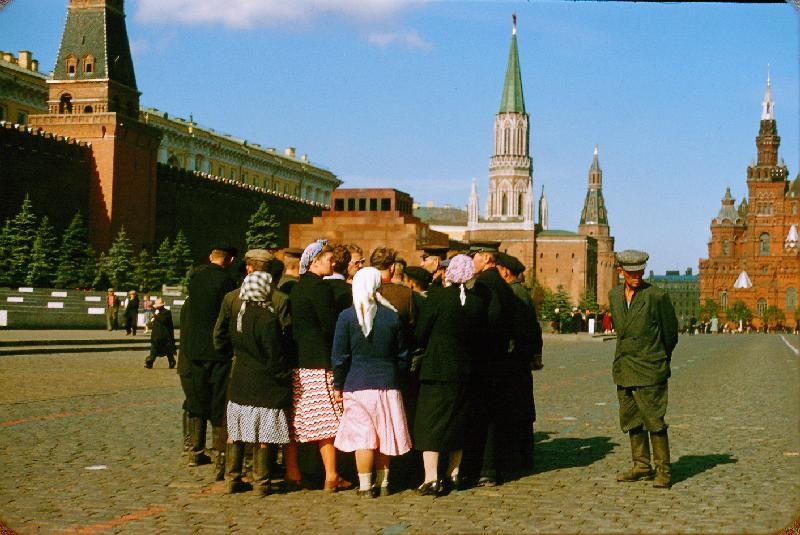
MOSCOW, Russia -- Twenty years ago, on December 8, 1991, the leaders of the Soviet Union's Slavic republics – Russia, Ukraine and Byelorussia – signed an agreement dissolving the Soviet Union.
Formally, they claimed the right to dissolve it because these three republics established it in 1922.

Many analysts still dispute the legitimacy of this deal, but that does not change anything.

By December 1991, the Soviet Union had de facto ceased to function, as power already belonged to its constituent republics.

The 20th anniversary of the collapse of the Soviet Union evoked more lively debates than the tenth or 15th anniversaries.

This seems paradoxical – with the passage of time, emotions generally subside, giving way to more sober and unbiased analysis, all the more so since the Soviet past is no longer a functional tool capable of creating something new.

This anniversary brought into stark relief the divisions between Russia and the other former Soviet republics.

In Russia, people remember the collapse with mixed emotions.

Some feel sorrow and nostalgia, others feel joy and schadenfreude, but everyone perceives it as a loss.

The other republics, which are still called “newly independent states,” celebrate it as their birth, that is to say as something gained.

This conceptual difference existed before, but now it is acquiring a special meaning for Russia.

The fixation on collapse – an exclusively destructive act – is setting the tune for national development.

Luckily, Russia has never had strong revanchist attitudes, but it is still suffering from an inferiority complex in its current borders, although it is perfectly clear that nobody wants to restore the USSR.
Sorrow over the end of the Soviet Union primarily reflects the absence of a conceptual replacement for the former socio-political formation.

The ideological anti-communist revolution of the early 1990s, designed to discredit the Soviet model to the world once and for all, quickly came to a halt.

First, nobody found convincing and consistent arguments, without internal contradictions, that could be patiently and professionally introduced into the public consciousness.

Painting a picture of the horrible, totalitarian past was not as easy as it first seemed.

It was impossible to ignore the achievements of the Soviet era without putting oneself in a vulnerable position.

To this day, pro-Soviet demagogy easily prevails over anti-Soviet rhetoric.

Second, some manifestations of “real democracy” have been so repulsive that many have started looking at “real socialism” through rose-colored glasses.

Finally, the political class took up a completely different matter – trying to convert the credit of public trust into power and property for itself.
The reforms of the 1990s, primarily privatization, reached their real, as opposed to stated, goal, and returning to the Soviet economic model and politics became impossible.

Yet, the exploitation of nostalgic feelings for Soviet life became widespread – having started under Boris Yeltsin it flourished and became systemic under Vladimir Putin.

The collapse of the Soviet Union will remain in the center of public debate until it is replaced by a more meaningful subject.

And there are no signs of this replacement so far.

Modern Russia finds it hard to deal with anything related to “values,” which makes it unreasonable to hope for the formation of any ideological platform.

It is possible to artificially maintain interest in the Soviet Union for a long time, but in this case the public debate will be increasingly divorced from real politics and goals.

With the passage of time, the Soviet past will become increasingly distorted as in a crooked mirror, engendering a more counterproductive and inadequate public response.

For all the differences from other republics (and Russia is still the official successor of the USSR and remains an empire structurally), Russia will still have to traverse their path to some extent.

The next stage involves acquiring a non-Soviet and non-post-Soviet identity, that is, to accomplish the task that other union republics have resolved – each in its own way.

Lamenting the loss over and over again is not just useless but counterproductive, all the more so since it is difficult to get out of the trap – the same elite that longs for the “real country” (its second generation) consists of the same people that once condemned it to extinction.
After all, it was the Russian Federation that played the decisive role in the Soviet Union’s collapse.

Popular fronts in the Baltic states or Ukrainian nationalists would have never achieved their goals if the Russian democrats had not backed them.

The sooner Russia views itself as a self-sufficient and fully-fledged state rather than a fragment of “something real,” the greater the chance it will be able to channel the nation’s energy into a constructive endeavor.

Monday, 28 November 2011

Stalin's daughter Lana Peters dies in US of cancer

Stalin's daughter Lana Peters dies in US of cancer

The only daughter of Soviet dictator Josef Stalin has died of colon cancer in a US care home, aged 85.

Svetlana Alliluyeva, also known as Lana Peters, passed away in the state of Wisconsin on 22 November, US officials have confirmed .

Her defection from the Soviet Union in 1967 was a propaganda coup for the US. She wrote four books, including two best-selling memoirs.

But she said she could not escape the shadow of her father.

When Peters arrived in the US, she said she had come for the "self-expression that has been denied me for so long in Russia".

Her defection was partly motivated by the Soviet authorities' poor treatment of her late husband, Brijesh Singh, she said.

Peters went to India in 1966 to spread Singh's ashes, but instead of returning to the Soviet Union she walked into a US embassy to seek political asylum.

She burned her passport, denouncing communism and her father, whom she called "a moral and spiritual monster".

She graduated from Moscow University in 1949, initially working as a teacher and translator.

Peters was married four times - three of them in Russia - and left two children behind in her homeland.

Her first memoir, Twenty Letters to a Friend, was published in 1967 and made more than $2.5m.

She took the name Lana Peters upon marrying architect William Wesley Peters in the US.

The couple settled in central Wisconsin and had a daughter, Olga, before divorcing in 1973.

She returned to the Soviet Union briefly in the 1980s, renouncing the US, but left again after feuding with relatives.

In an interview in 1990 with the Independent newspaper, Peters said she had no money and was living with Olga in a rented house.

Stalin, who died in 1953, is deemed responsible for the deaths of millions of his countrymen.

Peters - who was six years old when her mother took her own life - was once close to her father, who called her his "little sparrow". But they grew distant in his final years.

He sent her first love, a Jewish filmmaker, to Siberia.

Peters's brother, Jacob, died in a Nazi concentration camp during the Second World War when her father refused to exchange him for a German general, while her other brother, Vasili, died an alcoholic, aged 40.

Peters bemoaned the constant association with her father.

"People say, 'Stalin's daughter, Stalin's daughter,' meaning I'm supposed to walk around with a rifle and shoot the Americans," she once said.

"Or they say, 'No, she came here. She is an American citizen.' That means I'm with a bomb against the others.

"No, I'm neither one. I'm somewhere in between. That 'somewhere in between' they can't understand."

While Peters denounced her father's regime, she also blamed other communist party leaders for the Soviet Union's policy of sending millions to labour camps.

Sunday, 17 April 2011

Exhibit Chronicles Lives Of Workers At Chernobyl

NEW YORK, USA -- Families walk their children to school. Teenage girls smile backstage before a concert. Couples work out at a gym not far from villages where subsistence farmers draw well water and raise crops.
Welcome to the present-day Chernobyl region.

A quarter-century before a tsunami triggered a nuclear crisis in Japan, the world's attention was riveted by the Chernobyl Nuclear Power Plant as it spewed radioactive material across much of the Northern Hemisphere.

A generation later, thousands of people live in the region — and even still work at the disabled plant.

Freelance photojournalist Michael Forster Rothbart wanted to understand why anyone would choose to stay in the radioactive area, so he went to Ukraine on a Fulbright Scholarship in 2007 and for two years lived 10 miles south of the Chernobyl "exclusion zone."

He got to know the people whose lives changed on April 26, 1986, when the No. 4 reactor blew up 60 miles from Kiev, Ukraine's capital.

His "Inside Chornobyl" exhibit, a photographic collage that focuses on five families who work in the Chernobyl zone, opens Sunday at the Ukrainian Museum in New York. A parallel exhibition of his work, "After Chornobyl," opens at the Ukrainian Institute of American on Tuesday.

Both run until May 8.

"People told me 'I'd rather die here than live anywhere else,'" he said of the 3,800 people who work at the plant, many of whom live in Slavutych, 30 miles to the east.

"In this country we're so mobile that it's hard for us to conceive that people have such deep ties to the land and community that they would stay in the face of such adversity," he said. Some stay for lack of alternative or a sense of duty, others because they have decent jobs or simply because it's home, Forster Rothbart said.

Chernobyl workers make about $500 a month, about twice the country's average monthly wage.

Many of Forster Rothbart's images belie the enormity of the 25-year-old catastrophe. The explosion released about 400 times more radiation than the U.S. atomic bomb dropped over Hiroshima. Thousands of children developed thyroid cancer, and other possible health problems are still being documented.

But how many people died is still debated. Several international agencies say 50, and others predict radiation-related deaths will eventually climb into the thousands.

The plant stopped making electricity in 2000, but nuclear fuel remains on site. The Chernobyl plant lies within the exclusion zone, where workers live for two weeks at a time because of high contamination.

The zone also is home to some 400 elderly people who returned to their ancestral homes despite government's warnings to stay out. Another 3,800 people work at the plant.

For "Inside Chornobyl," which uses the Ukrainian spelling, Forster Rothbart focused mainly on those who commute daily by train from Slavutych. It's a city of 25,000 people built after the accident for displaced workers from Pripyat, which was abandoned after the explosion and is now an eerie ghost town a mile from the plant.

Some are involved in a project to build an enormous cover for the reactor building intended to block fallout from escaping when the reactor is disassembled sometime in the future.

Forster Rothbart said his goal was to go beyond the "sensationalist approach" that showed the suffering but obscured the complexity of how displaced communities adapt and survive.

"I sought to create more nuanced portraits of these communities. Their suffering, of course, but also their joy, beauty, endurance and hope," he said.

People expect the Chernobyl zone "to look like a bombed out crater," he said, but a walk along the Pripyat River is like any scenic area of Ukraine.

The difference is that the radiation — invisible to the eye — "is all around you," he said.

His photo montage is combined with text mounted on large vinyl banners. Among the most chilling images is that of two dolls lying on a shattered kindergarten windowsill in Pripyat. A caption quotes the school's former director: "I only went back once. I couldn't stop crying."

Another is that of the plant's burned out fourth-block control room, where a combination of design flaws and human error triggered the accident. Another photo shows three workers checking their hands and feet for radioactive contamination before heading home.

The exhibition juxtaposes images of people's working and private lives. It shows Oksana Rozmarisa operating machines that measure radiation levels in the plant and her husband, Leonid, as a shift supervisor there.

The photos also portray the couple's passion for bodybuilding. In one image, Leonid holds up his wife in one arm and his son in the other.

In other photos, engineer Tanya Bokova poses at the plant's decommissioning office and at home with her husband. Their smiling faces make clear the Chernobyl disaster does not overshadow their lives.

"I feel happy because I have a family, a beloved husband, parents together. I have a good job, which I go to with delight," she is quoted as saying in a photo caption.

As for Forster Rothbart, he said, "The story seemed important enough that I was willing to undertake some risk."

"In this country, every day people die in car crashes. We're used to it and so we don't even think about it. The same is true in Chernobyl.

Radiation is just part of living there," he said. "Everyone in Slavutych knows someone who has cancer or who died of cancer. It's sort of a veil of normality over this very troubling background."

He said it was impossible not to draw parallels between the Chernobyl accident and Japan's crippled nuclear plant.

"They'll be forming a similar exclusion zone 25 years from now; they'll still be dealing with the consequences just like the people in Chernobyl are today," he said.

The exhibit is presented jointly by the museum and the Children of Chornobyl Relief and Development Fund.

Forster Rothbart, 39, lives in Oneonta, N.Y. He has done freelance work for The Associated Press and other media outlets. Among his other projects is "Fracking Pennsylvania," which explores the effects of natural gas drilling on rural communities.

Sunday, 20 March 2011

Did Britain try to assassinate Lenin?

Nearly a century ago, Britain was accused of masterminding a failed plot to kill Lenin and overthrow his fledgling Bolshevik regime. The British government dismissed the story as mere Soviet propaganda - but new evidence suggests it might be true.

For decades what became known as the "Lockhart plot" has been etched in the annals of the Soviet archives, taught in schools and even illustrated in films.

In early 1918, in the final months of World War I, Russia's new Bolshevik government was negotiating a peace deal with Germany and withdrawing its exhausted troops from the front.

This did not please London. The move would enable Berlin - which had been fighting a war on two fronts - to reinforce its forces in the West.

Determined to get the Russians back into the war on the Allied side, the British despatched a young man in his 30s to be London's representative in Moscow.

His name was Robert Bruce Lockhart.

Lockhart, a Scot, was a colourful character. Known for his love of wine, women and sports, he also prided himself on his alleged ability to read five books at the same time.

At first, the well-read Lockhart seemed to be making progress on the issue but, in March that year, the Soviets signed the Brest-Litovsk peace treaty with Germany, so ending hope of them rejoining the war with the Allies.

Lockhart, it seems, had no intention of giving up.

Instead, the suggestion is, his attention was now turning to overthrowing the Bolshevik regime and replacing it with another government that would be willing to re-enter the war against Germany.

Documents show that, in June, Lockhart asked London for money to fund various anti-Bolshevik organisations in Moscow.

This letter, marked "urgent", was sent from the Foreign Office to the Treasury. It sums up the Foreign Secretary's attitude to the Moscow's representative's request:

"Mr. Balfour is of the opinion that the moment has arrived when it has become necessary to take this action, and I am to request that you will move the Lords Committee to give the necessary sanction for the expenditure of such funds as Mr. Lockhart can collect for this purpose."

In late May, the British decided to send a small military force to Archangel in northern Russia.

The official line was that the troops were going to prevent thousands of tonnes of British military equipment, supplied to the Russians, from falling into German hands.

However, documents from the day suggest that plans were later drawn up for these 5,000 British troops to join forces with 20,000 crack Latvian troops who were guarding the Kremlin but could, it was thought, be turned against the Bolsheviks.

In the summer of 1918, Lockhart sent a telegram to London following a meeting with a local opponent of the Bolsheviks called Savinkov.

It read: "Savinkov's proposals for counter-revolution. Plan is how, on Allied intervention, Bolshevik barons will be murdered and military dictatorship formed."

Underneath that telegram is a note bearing the signed initials of Lord Curzon, who was then a member of the British War Cabinet.

It says: "Savinkoff's methods are drastic, though if successful probably effective, but we cannot say or do anything until intervention has been definitely decided upon

Meanwhile Lockhart had teamed up in Moscow with another highly colourful character.

Sidney Reilly, a Russian who had earlier changed his name from Rosenbloom, was a flamboyant, high-rolling entrepreneur who had recently begun working for the British Secret Services.

He became known as the Ace of Spies, made famous in books of derring-do, and was even credited as being the inspiration for Ian Fleming's James Bond.

But both were soon in for a shock.

In the late summer of 1918, an attempt was made in Moscow to assassinate Lenin. He was shot twice from close range by a young Russian woman.

The Bolshevik's secret police, the Cheka, arrested Bruce Lockhart a few hours later and he was taken to the Kremlin for questioning.

Reilly escaped the Cheka's clutches on that occasion but was shot dead several years later after being lured back into Russia.

According to Cheka records, Lockhart confessed to being part of a plot proposed by London to kill Lenin and overthrow the Bolshevik government. But in early October 1918, Britain's representative to Moscow was freed in an exchange for his Russian counterpart in London.

In his best selling book, Memoirs of a British Agent published in the 1930s, Lockhart insisted that he had played no part either in attempts to kill Lenin or overthrow the Bolshevik government.

Instead, he insisted that the maverick "Ace of Spies" Sidney Reilly was the man behind plans for a coup.

Lockhart added that he had little to do with Reilly who some claimed was out of control.

However, a letter written by Lockhart's son, Robin, has been discovered in archives in America. It suggests that his father was being rather economical with the truth:

"If the question of my father's relationship with Reilly still exercises anyone's mind in the F.O., it is clear from his book Memoirs of a British Agent that once intervention in Russia had been decided on in 1918, he gave his active support to the counter-revolutionary movement with which, of course, Reilly was actively working.

"My father has himself made it clear to me that he worked much more closely with Reilly than he had publicly indicated…"

The man who found that letter, Professor Robert Service, believes the only way to be sure of the truth would be to gain access to the rest of the files from the day.

But, more than 90 years later, the British government continues to keep many of them secret. All, in Robert Service's view, to maintain the myth that Lockhart-style plots have not - nor ever would be - countenanced by London.

"Britain today has a policy for its intelligence services that is openly averse to subverting foreign governments or assassinating foreign political leaders," he says.

"My guess is that the thinking in Whitehall is that the pretence ought to be that this has always been the case. That the British have always been clean.

"The British haven't always been clean. They have been as dirty as anyone else."


Sunday, 13 March 2011

At The Ancient City Of Kamyanets-Podilskiy, The Wall's The Thing

KAMYANETS-PODILSKIJ, Ukraine -- Looking across the gaping stone canyon at the ancient walled city of Kamyanets-Podilskiy in southwestern Ukraine, you can imagine what it must have felt like to ride up to this place at the head of an invading horde.
It would have been a sinking feeling, as deep as the gorge in front of you.

The old city is almost entirely enclosed by the canyon created by a loop of the Smotrych River. To get to the town, you would have to lead your men straight down a rock face more than 100 feet high, then across the river, which would have been flooded, thanks to some ingenious dams.

If you managed to get to the far bank, you would have to scramble up another cliff. Even without the people inside shooting at you, your horde would be pretty grumpy when you got to the top. Oh, and then you'd be facing the city walls. ("One of you knuckleheads did remember to bring the ladder, didn't you?")

The other option would be to advance across the narrow isthmus at the mouth of the loop. But that was defended by a massive stone behemoth that looked like something out of a very dark legend - all turrets, gun ports and towers.

The walls are still there today, but now this enchanting city welcomes tourists. And if you want to get inside the ancient fortress, all you need is a ticket that costs less than $2.

Nobody knows when people first used this natural citadel to hold enemies at bay, but it was certainly occupied by the 11th century. Mongols overran the city in about 1240. After that, the defenses were stiffened.

The older of the two fortresses that guard the main approach to the town began to take shape in the 14th century. Its walls are 45 feet high and almost 15 feet thick. In 1621, a second fortress of massive earthen walls was built in front of the Old Fortress.

Over the years, the fortifications have repelled more than 50 assaults and sieges. According to legend, when the Turkish Sultan Osman arrived at the city in 1621, he asked who had created such a forbidding stronghold. "It was created by Allah himself," came the answer. "Well then, let Allah storm it," the sultan responded, before withdrawing.

The fortress has rarely been taken by direct attack.In 1393, a Lithuanian prince conquered the city thanks to dissension in the ranks of the defenders. And in 1672, a Turkish army outnumbered the garrison by a ratio of 60 to 1. After the city fell, Mehmed IV supposedly trampled looted icons as he rode into town.

You can clamber over the remains of the New Fortress without a ticket. Inside the Old Fortress, you'll get an idea of what life was like for the soldiers, see the hole where debtors were flung if they couldn't pay their bills, and examine the well in one of the castle towers from which soldiers hauled up water using a device that looks like a giant hamster wheel.

It may come as something of a surprise that such a massive and well-preserved bastion stands in Ukraine. But if Mesopotamia is the cradle of civilization, the lands of present-day Ukraine are probably the cradle of conquest.

Much of the land is rich and flat, perfect for farming and war. Scythian, Mongol, Tartar, Cossack, Russian, Polish, Turkish, Lithuanian, Austrian, Hungarian, Swedish, English, Greek and German armies have all come this way.

Which is why people in Ukraine have spent a lot of time building walls. The country holds more than 300 citadels and castles. They range from walled monasteries along the Dnieper River to Genoese towers on the Black Sea, built to guard trading outposts.

Kamyanets-Podilskiy is one of the most impressive. The old part of the city - in the oxbow of the river - is not much more than half a mile long and is full of old buildings and historic churches. We hired an English-speaking guide for a 2 1/2-hour walking tour for about $20.

Wandering the cobbled streets, you can see the Windy Gate (remembered as the place where a breeze had the audacity to pluck off Peter the Great's hat in 1711) and the partially reconstructed Polish Gate, which guards a ford in the river.

There's the old city hall, which now houses three small museums, and the ruins of a 15th-century Armenian church. The facade of the Cathedral of Sts. Peter and Paul cradles a 17th-century minaret built when the Turks ruled the city.

When the Poles got the town back by treaty in 1699, they decided not to knock it down, but topped it with an 11-foot golden statue of the Virgin Mary.

Signs in Ukrainian and English point the way to the main attractions.

Several hotels have opened in the old city and several more are in the new city within easy walking distance. We stayed in one across the river, a 10-minute walk from the historic district.

The old city suffered heavy damage during World War II. Many of the drab postwar buildings have recently been replaced with modern buildings that look as if they could have been built centuries ago.

Locals, such as Ukrainian castle expert Iryna Pustynnikova, find this quite disappointing, because drawings of what the old city looked like could have guided authentic restorations.

Local authorities opted for plans more likely to attract investors. I didn't find the new stuff offensively Disneyish, but more discerning people might.

For centuries, the city had a remarkably diverse population - Poles, Ukrainians, Russians, Jews, Armenians. But with Soviet rule came many deportations. And the Nazi occupation during WWII was followed by terrible massacres. More than 23,000 Jews were killed near the city in three days in August 1941.

That incident is not prominently mentioned in tours of the city, but it is the one that came back to me as I wandered the ancient fortifications.

Today, we see such ramparts as quaint architectural marvels, almost like something from a fairy tale. But people built them out of fear - because conquerors exact a terrible price.

Saturday, 30 October 2010

Harper Accused Of Exaggerating Ukrainian Genocide's Death Toll

KIEV, Ukraine -- Prime Minister Stephen Harper is being accused of exaggerating this week the extent of the 1932-33 famine that was declared a genocide by Canada's Parliament two years ago.
Harper indicated on both days of his first-ever journey to Ukraine that "almost" 10 million people died in what is known as the Holodomor — or "death by starvation."

Critics, while stressing that the death toll of the famine caused by Soviet dictator Josef Stalin's policies is massive and remains one of history's great crimes against humanity, said the true figure is roughly a third of Harper's.

"I find it regrettable that Stephen Harper and other leading Western politicians are continuing to use such exaggerated figures for Ukrainian famine mortality," University of Melbourne historian and demographer Stephen Wheatcroft told Postmedia News in an email.

"There is absolutely no basis for accepting a figure of 10 million Ukrainians dying as a result of the famine of 1932-33. No reputable demographer accepts this," stated Wheatcroft, who puts the figure at around 3.5 million.

"None of the Ukrainian, Russian or Western historians, who are experts in this area, who have looked at the detailed evidence and have an ability to understand numbers, would support such a figure."

Harper spokesman Dimitri Soudas said Friday "nobody" can be sure how many died.

"To minimize this act of genocide by claiming exaggeration is quite sad because there are a number of published estimates," Soudas wrote in an email.

Harper made two references to the famine while in Ukraine.

"Some 10 million people, up to 10 million people, and we'll never know the numbers for sure, (were) killed, and killed through the deliberate plans of their own government," he said at the joint news conference in the capital city of Kyiv while sitting next to President Viktor Yanukovych.

On Tuesday, Harper raised it again while speaking to students at a small Catholic university in Lviv, in Ukraine's nationalist heartland.

"Now as you know almost as many — or you may know — almost as many Ukrainians died in the Holodomor during the 1930s as there were Canadians alive at that time," he told them.

During the time of the famine there were approximately 10.6 million Canadians, according to Statistics Canada.

Ukrainian Canadian Congress president Paul Grod sent out a statement after Tuesday's event that actually exaggerated Harper's claim.

"Harper emphasized the genocidal nature of the Holodomor and commented that more people were killed during that horror than were alive in Canada at that time," Grod wrote.

Grod referred Postmedia News to University of Quebec historian Roman Serbyn, who in the introduction to a 2008 essay referred to estimates ranging from three to 10 million. But attempts to reach Serbyn were unsuccessful.

Yale University historian Timothy Snyder said most "scholarly estimates" range from 2.5 to four million. He estimates that 3.3 million ethnic Ukrainians died in the entire Soviet Union during the 1932-33 famine.

Snyder, author of the newly published book Bloodlands: Europe between Hitler and Stalin, said he found Harper's estimate "surprising" given that a January report commissioned by the previous Ukrainian government concluded there were 3.9 million deaths.

University of Alberta historian John-Paul Himka wrote in a 2008 academic journal that the 10 million figure is arrived at only by including the children who would have been born if not for the famine.

The true victims of Soviet dictator Josef Stalin's brutal policies, should be "unsullied by falsehood" and inflated figures not be used as a "political tool," Himka argued.

"I find it disrespectful to the dead that people use their deaths in a ploy to gain the moral capital of victimhood. To this end, they inflate the numbers."

Monday, 27 September 2010

Polish President Visits Ukraine To Honor Soviet Victims

KIEV, Ukraine -- Polish President Bronislaw Komorowski will visit the Ukrainian city of Kharkiv on Saturday to commemorate the 1940 massacre of about 4,000 Polish officers by the Soviet secret police NKVD.
Komorowski, who was elected president following the death of former president Lech Kaczynski in a plane crash in western Russia in April, will attend a memorial mass and wreath-laying ceremony along with Ukrainian Prime Minister Mykola Azarov.

According to declassified WWII documents, Soviet leadership approved a proposal by NKVD chief Lavrenty Beria, dated March 5, 1940, to execute all members of the Polish Officer Corps.

The executions took place in various parts of Russia, Ukraine and Belarus. The largest massacre occurred in the Katyn forest near the Russian city of Smolensk.

In Ukraine, the Soviet secret police took the Polish officers from the Starobelsk camp near Kharkiv, shot them in the inner NKVD Kharkiv prison and buried their bodies outside of the city.

The mass murder of thousands of Polish officers, police and civilians taken prisoner during the 1939 partitioning of Poland by the Soviet Union and Nazi Germany, remains one of the most painful issues in Russian-Polish relations.

Tuesday, 21 September 2010

Presidential Official Proposes To Declassify Soviet-Era Security Lists

KIEV, Ukraine -- Deputy chief of the Ukrainian presidential administration Anna Herman has suggested conducting a lustration in Ukraine.
"I think a lustration would be very useful for Ukraine. The Polish experience has shown an amazing fact: after the lustration it turned out that it was the right-wing camp that had more security officers than the left-wing. I think something similar could happen in Ukraine as well," Herman told journalists.

A lustration "will allow not just to purify the power and to increase confidence in officials, it will also protect those who are sometimes victimized by various sleazy provocations by the press," she said.

"You know how easy it is to make provocations and to accuse someone of having worked for the KGB. It is very difficult to protect oneself from this. If we open [the archives], hold a lustration and publish lists of those who cooperated, that means that those people who did not cooperate will be guaranteed that no one would upset them in this country," the deputy chief of the presidential administration said.

Herman made such statements on Friday after attending an exhibition about the East Germany's secret service (Stasi), which opened in Kiev.

The secret filed can be declassified while people mentioned in them are still alive, she also said.

"I am not supporter of the idea that documents should remain classified as long as people named therein are still alive," she said.

"One has to know the truth, no matter what it is like and whoever might be involved, and one has to answer for the truth," she said.

"Our society needs to be purified. So far there are no such statutory acts and today we cannot force the Security Service to break the law. I suggest passing legislation for these documents to be handed over to institutions, in particular, the Institute of National Memory. It will be done," Herman said.

Saturday, 28 August 2010

In The Nerve Center Of The Cold War


PERVOMAISK, Ukraine -- We are 100 feet underground. The dark eyes of Edward Idrisovych Sabirov skip around the tiny room. He knows every inch of it. For five years, he waited here for an order that never came: Blow up chunks of the U.S.
Today, Mr. Sabirov guides tourists through his old haunt, now the Museum of the Strategic Rocket Troops.

At the climax, he takes visitors by twos or threes into a cramped, gray elevator to descend to the underground command post. The center controlled 10 nuclear-tipped missiles buried in the rich black earth of the Ukrainian steppe.

This journey into the bowels of the Cold War reveals deadly doomsday mechanics. But Mr. Sabirov, who speaks both Russian and Ukrainian, is just as riveting. As he crisply explains his job, this intense man who grew up on the Volga River, east of Moscow, wins my respect.

He has me sit at his old console to go through the final steps required to wipe out several million Americans: Open a little door on the instrument panel. Press the gray button inside.

Nearby, a launch officer at another console presses a similar gray button. Then each launch officer opens another door on his console, revealing a small metal fitting into which each inserts a key. At the same moment, each twists his key while holding down a button.

Ignition

After a moment of silence, I ask Mr. Sabirov what he thought about when he imagined turning the key.

"Truman," he says, in a flash. "I thought a lot about Truman. You know, he was the one who changed the rules of the game."

The unassuming little museum is about 3½ hours south of Kiev by car. Hawks wheel across the undulating horizon and skylarks sing above lime-green wheat fields.

Missiles and rocket engines surround the low museum building. Its five above-ground rooms display models and mock-ups of how the place operated during the Cold War. Photographs of the destruction wrought by President Truman's decision to bomb Hiroshima and Nagasaki line the walls of the back room.

The tour is in Ukrainian and may seem a bit long-winded, even with a translator. But it is worth the wait for the underground portion of the tour.

The trip to the base's nerve center begins with a walk through 100 yards of drab underground tunnels lined with cables. After a few minutes, we reach the elevator that hugs the side of a 12-story steel silo.

The same size as the missile silos, it was designed to quarter launch crews. The elevator has room for only three or four people at a time. "Please don't touch anything," he says to the rest of us before dropping out of sight with the first party.

When our turn comes, the descent provides plenty of time to wonder what would happen if the elevator malfunctioned. At the bottom, the door swings open on turquoise-paneled living quarters for the men waiting to go on duty. The space is less than 11 feet in diameter.

Three people could sleep and eat here, though typically there were crews of two. The space has the engineered feel of a railroad-car sleeping compartment and holds a small stove, a tiny refrigerator, three fold-down bunks, a drop-down table with seats, a shower, a sink, a toilet. In one corner is a ventilator. Smoking was allowed but drinking was strictly forbidden.

"If you were caught with alcohol, you were sent to a place people never come back from," Mr. Sabirov explains.

On one wall, a steel ladder goes up through a hatch to the cramped command center, where the launch crew sat during its six-hour shifts. The room, beige with a red linoleum floor, bristles with buttons and dials.

We sit at the command consoles as he guides us through the launch sequence. I man the senior station, now marked with No. 1 and a yellow and blue Ukrainian emblem.

Firing required four hands operating at once. The consoles were distant enough to make it physically impossible for one man to fire the missiles. Given that Soviet officers sat in this claustrophobic room for six-hour shifts, year after year, it seems like a very sane arrangement.

As Mr. Sabirov explains the procedures in crisp professional terms, I consider him sitting here in the 1980s, prepared to launch a missile while I was raising two daughters in Miami. I can't remember worrying much about the nuclear threat then, but sitting next to the launch key, I wonder whether I should have worried more.

Until 1991, Ukraine was an integral part of the Soviet Union, and the U.S. Defense Department considered the missile arsenal at Pervomaisk one of the crown jewels of the U.S.S.R.'s ballistic system.

When the Soviet Union collapsed, independent Ukraine inherited an arsenal of 1,900 strategic nuclear weapons. The Russians didn't relinquish the launch codes, but if Ukraine had taken over the missiles and warheads, as it might have, it would have become the world's third-largest nuclear power.

After a lot of back and forth, Ukrainians agreed to give up their nuclear sword. The warheads were shipped to Russia and dismantled. The rockets themselves were destroyed over the next few years.

Two other former Soviet republics, Belarus and Kazakhstan, did the same. Mr. Sabirov says that some Ukrainian visitors to the museum think it was a good idea, but others are sorry "we gave up the rockets."

As for Mr. Sabirov, "I don't get into politics myself." But his nostalgia is clear when he says: "We didn't have jeans, we didn't have butter, they put water in our margarine, but we had the best rockets in the world."

Sunday, 20 June 2010


SEVASTOPOL, Ukraine — Glory, tragedy and an army of ghosts haunt this great naval base that commands the Crimea and surrounding Black Sea.
I had been invited by Britain’s 8th Hussars to commemorate the 150th anniversary of their unit’s participation in the fabled Charge of the Light Brigade at Balaclava. Alas, a serious injury prevented me from going to Crimea, a place I had studied and dreamed about since boyhood.

As I sailed Sevastopol’s magnificent natural harbour, I was gripped by the drama of the place.

In 1854, a British, French, Turkish and Sardinian force attacked Crimea to stop the expanding Russian Empire from gobbling up the dying Ottoman Empire.

The Crimean War was a nightmare for the soldiers involved. Disease killed four times more than combat, provoking a refined lady named Florence Nightingale to open Britain’s first field hospital at Balaclava.

Sevastopol was besieged for 349 days. Its bastions and redoubts were brilliantly defended by Russian soldiers and sailors. Combat was brutal. The British hogged most of the military glory, but the French really won the siege.

In September, 1855, French Zouave elite infantry in baggy red pants, blue vests and tasseled hats finally stormed the great Malakoff Redoubt, breaking Russian defenses.

Near the British supply base at Balaclava, Lord Cardigan’s Light Brigade misunderstood its orders and charged to its doom against Russian guns.

Nearby, in a now forgotten action, Gen. Scarlett’s Heavy Brigade staged a brilliant charge against massed Russian cavalry.

Pictures painted by the great Victorian artist, Lady Butler — Charge of the Heavy Brigade, and the famous Thin Red Line of Highlanders defending Balaclava — hang in my home.

Most of Sevastopol was destroyed by British-French bombardment. Eight decades later, in 1941, Germany attacked Crimea. The ablest German general, Erich von Manstein, led his 11th Army into Crimea and besieged Sevastopol, defended by 236,000 Soviet sailors and soldiers.

The Germans used enormous siege guns against the port’s fortifications, including “Thor,” a monster 800-mm railroad gun, and a 615-mm mortar, “Schwerer Gustav.” Both had been secretly built to crush France’s Maginot Line forts.

Sevastopol held out for nine months of ferocious fighting in which almost all the Soviet defenders died or became prisoners. I explored the ruins of the Maxim Gorky 305-mm battery which fought to its last round, then was blown up. Photos of its valiant defenders hang on its concrete walls.

On May 9, 1944, the 2nd Soviet Guards Army recaptured Crimea and Sevastopol. Ninety-eight percent of the city lay in ruins. Soviet leader Stalin proclaimed Sevastopol a “Hero City of the Soviet Union,” along with Leningrad and Stalingrad, and ordered it rebuilt to its former neo-classical beauty.

Sevastopol was just back in the news. Ending a rancorous dispute with Moscow, Ukraine’s new government renewed Russia’s lease on the Black Sea Fleet’s Sevastopol base until 2042 in exchange for $40 billion worth of deeply discounted natural gas. Ukraine had previously been unable to pay its national heating bills, facing a Russian shut-off in winter.

I observed morning formation aboard one of the sleek Russian destroyers, bristling with anti-ship and anti-aircraft missiles. Watching the sailors raise their fleet’s historic battle standard, the blue Cross of St. Andrew, seemed a fitting tribute to Sevastopol’s suffering.

Ukraine is doing surprisingly well. The new government of Viktor Yanukovich says Ukraine will not join NATO but rather maintain close relations with Russia. All the empty sound and fury of the former pro-western Orange government is unlamented by many Ukrainians who crave political peace. So far, Ukrainians and Russians seem to be getting along.

Warm, sunny Sevastopol and Odessa are becoming Ukraine’s Riviera. The scenic little port of Balaclava, with its former Soviet underground submarine base that housed nuclear weapons, is thronged by pleasure boats and yachts.

Sevastopol has belonged to Ukraine since the 1954. But its soil is soaked deep by Russian blood, and in spirit, Russian it will always remain.

Wednesday, 16 June 2010

Ukrainian Sues Yanukovych Over Famine Statement


KIEV, Ukraine -- A court in Ukraine is due to start hearing a lawsuit against President Viktor Yanukovych for saying the famine that killed millions of Ukrainians in the 1930s should not be considered genocide.
Volodymyr Volosyuk is suing Yanukovych for a statement he made in the Parliamentary Assembly of the Council of Europe in April. Yanukovych said that "it is not fair to call the great famine in Ukraine in 1932-1933 a genocide against the Ukrainian people."

Volosyuk argues that Yanukovych wounded his personal honor and dignity and the memory of the millions of Ukrainians who died in the famine. He wants the court to demand that Yanukovych offer a public apology for his statement in Strasbourg.

Yuriy Karmazin, a member of Ukraine's Parliamentary Committee on Issues of Justice, told RFE/RL that the Kyiv appeals court had ruled that the Soviet leaders of the 1930s were responsible for the famine that killed millions of people in Ukraine.

According to Karmazin, denying the famine took place is illegal. Yanukovych did not deny the famine, but he said it affected many nationalities and ethnic groups, and therefore it was not fair to label it genocide.

A second member of the Parliamentary Committee on Issues of Justice, Svyatoslav Oliinik, told RFE/RL that the case has no chance of success. He predicted that Volosyuk will not be able to prove judicially that his rights were abused.

Mykola Zamkovenko, a former chairman of Kyiv's Pechera District Court, which is hearing the case, told RFE/RL that it is necessary to have adequate legal documentation in order to state officially that the famine was genocide. He added that Yanukovych was simply expressing his personal opinion, which he has the right to do.

Monday, 14 June 2010

Drive is on to save wooden churches in western Ukraine


Ukrainian architect Andrij Kutnyi hopes his research on the nation’s wooden churches will bring the country closer to ensuring it does not lose one of the most recognized symbols of its cultural heritage.

“The churches need to be preserved, they are important for Ukraine,” Kutnyi said, referring to the many wooden churches that dot western Ukraine’s landscape. “The restoration of wooden churches has been problematic in recent years. But you have to understand them. It’s like dialysis.”

Kutnyi, who teaches architecture at Munich’s Technical University, has spent years traveling western Ukraine to learn about the complex architectural construction of the country’s wooden churches and documenting their centuries-old histories.

On June 11, Kutnyi was rewarded for his efforts when he received the prestigious European Union Prize for Cultural Heritage/Europa Nostra Awards at a ceremony held in Istanbul, Turkey. One of 29 awardees from 15 countries, Kutnyi is the first Ukrainian to be presented with the honor.

Established in 2002, the prize is awarded annually. It highlights some of Europe’s best achievements and showcases remarkable efforts made in safeguarding Europe’s landscape, archaeological and artistic heritage. Kutnyi was awarded for his research project entitled, “Sacred Timber Architecture in the Carpathians: Building Archaeology of Selected Objects in Western Ukraine.”

Internationally recognized, Ukraine’s wooden churches have become one of the country’s most iconic symbols. Although their exact number is unknown, the wooden churches are found in a relatively small geographic area – in western Ukraine, parts of Romania, notably in the Bukovyna region, and areas of Russia. Many of the churches are centuries old and have served as spiritual centers for often remote communities.

The wooden churches are known for their unique architectural style, as well as construction methods that include using few nails.

Largely through human neglect, and sometimes arson, however, Ukraine’s churches are disappearing. The country is losing an average of 5 to 8 churches annually. Lviv Oblast alone lost 17 structures in recent years, according to Kutnyi.

One of the big problems is that, instead of restoring the wooden churches, communities are tearing them down to build new elaborate brick buildings.

“There is a very low culture in our people,” said Mykhailo Kubai, assistant head of restoration at the State Historical Architectural Preserve in Zhokva, which is located 22 kilometers outside Lviv. “They disregard what they have.”

Priests can also create problems because they are the ones who oversee the churches, said Mykola Bevz, who heads the department of restoration and reconstruction of architectural complexes at Lviv’s Polytechnic University.

“In one church that was burned down, we suspect the priest was involved,” he said.

Sometimes, priests will encourage arson in order to cover up the theft of icons or the iconostasis, the wall of icons and religious paintings which separate the nave from the sanctuary in a church. Many of these objects are centuries old and were built for each church respectively.

Additionally, reconstruction efforts are expensive and are beyond the financial means of many communities. When conservation efforts are undertaken, though, communities will often choose the cheapest option and use a building firm that has no background in restoration practices.

“The wooden churches are not restored properly and those that are being restored are not professionally done,” Kutnyi said. “If conservation efforts are not done correctly, a church can fall apart.”

The movement to seriously begin conserving Ukraine’s wooden churches began in 2002, after members of the International Council on Monuments and Sites (ICOMOS) began discussions about adding 10 Ukrainian wooden churches to the United Nations Education, Scientific and Cultural Organization (UNESCO) World Heritage List. The list includes 890 properties world-wide that form part of the cultural and natural heritage that UNESCO’s World Heritage Committee considers as having outstanding universal value.

Several Ukrainian sites are currently on the list, including Lviv’s historic center ensemble, Kyiv’s St. Sophia and its related monastic buildings and the Kyiv-Pecherska Lavra.

The wooden church initiative, however, did not receive adequate support from the Ukrainian government, Kutnyi said. Since 2002, two of the churches that were meant to be included on the UNESCO list have been removed: a church in the small town of Horodok was burned down in January 2009, while another church in Potelych was badly restored.

The Troitska Church in Zhokva, however, is an example of how a wooden church can be saved, said Kubai. Unlike many of Ukraine’s wooden churches, this particular structure is owned by the state, but is run by the local community. The priest, Vasyl Batiuk, has done significant outreach to the community to ensure people understand the church’s importance; he is personally involved in its upkeep.

“We’ve had all the appropriate inspections,” he said on a warm June evening, as the smell of warm wood and field flowers filled the church chamber. “We want to be part of UNESCO.”

Vohneborets, a firm from Lviv, donated time and resources to treat the building with the proper chemicals so it can withstand a fire, Batiuk said. The proper wiring has been installed and alarm systems are in place to ensure priceless 17th and 18th century icons are not stolen.

“This is our historical legacy and it must be taken care of,” Batiuk said.